
Breast cancer surgery
How does breast cancer surgery work?
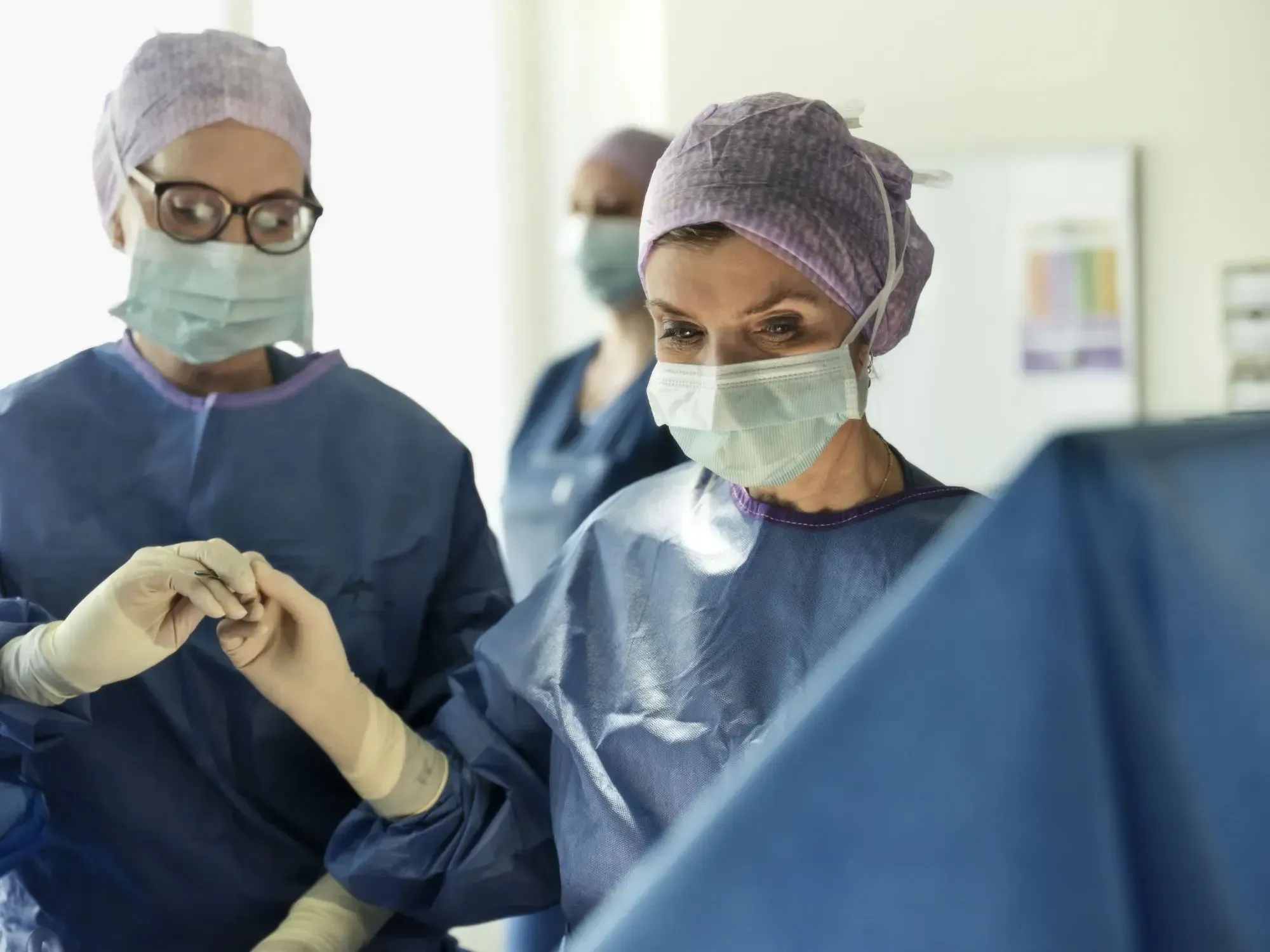
For most breast cancer patients, surgery forms part of the treatment plan. There are different types of procedure. Breast-conserving surgery is an option for most patients. The aim of this is to remove all the cancer while achieving a good cosmetic result. It may be that drug therapies, such as chemotherapy, are administered before surgery. In the event of breast removal (mastectomy), we offer all standard reconstructive methods in partnership with the plastic surgery team. Alongside successful treatment, your recovery and personal wishes are our top priority.
Surgical techniques at a glance
Surgical options for breast cancer:
- Minimally invasive procedure for benign changes – Benign changes or changes that could pose a risk can be removed using a minimally invasive vacuum-assisted biopsy if necessary. (LINK to vacuum-assisted biopsy)
- Breast-conserving surgery – This is possible in most cases. Often, what are called oncoplastic surgical techniques are used, for example in cases of large tumours, breast asymmetry or to avoid cosmetic limitations.
- Mastectomy – All breast tissue is removed. Often, the skin covering and nipple can be preserved for subsequent breast reconstruction. Most patients choose to have breast reconstruction after a mastectomy. This can be done during the same procedure or at a later date and is carried out in partnership with consultants from the specialist plastic surgery team.
- Lymph node removal – If necessary, sentinel lymph nodes or other lymph nodes in the armpit are removed to be tested for cancer cells.
When is breast surgery advisable?
Most people with breast cancer undergo surgery as part of their treatment. The type of procedure depends on the size of the tumour, its spread and the type of cancer, as well as the size of the breast relative to the tumour.
To ensure the best possible treatment, our team takes both the medical findings and the personal wishes of our patients into account when planning treatment.
In most cases, breast-conserving surgery is performed. Breast removal (mastectomy) is recommended if the tumour is large in relation to the breast, if there are multiple tumours, if a tumour has come back (recurrence) or if the patient requests it. Many women with a genetic risk of recurrent breast cancer opt to have a mastectomy.
In metastatic breast cancer, surgical removal of metastases can help to slow the progression of the cancer and alleviate symptoms.
Risk-reducing mastectomy
People at very high risk of breast cancer may decide to undergo a risk-reducing mastectomy. This involves removing the mammary gland tissue on both sides to minimise the risk of developing cancer in the future. In most cases, the nipple and breast skin can be preserved, allowing for a better cosmetic result after reconstruction.

What to expect before, during and after the operation
The planning, procedure and recovery depend on the type of surgery you are undergoing. Your treatment team will explain what will happen during the operation and what you can expect afterwards. Here is a general overview.
Preparing for surgery
When planning breast surgery, the treating consultant takes into account the size and location of the tumour in order to decide how to remove it while preserving as much healthy tissue as possible. If reconstruction is also planned, this will be arranged at the same time with one of our plastic surgery specialists. Drug therapies, such as chemotherapy, may also be administered before surgery to shrink the tumour.
The procedure
Surgery is usually carried out under general anaesthetic. Depending on the procedure, the operation may take several hours. During breast surgery, lymph nodes may also be removed, for example, the sentinel lymph node or other lymph nodes.
If you have chosen breast reconstruction, your plastic surgeon will perform the procedure once the mammary gland has been removed. This can be done during the same operation or at a later date.
After the operation
Depending on the type of operation, a hospital stay of two to five days is usual following the procedure.
During your stay, you will be cared for by your specialist team of doctors and nurses, ensuring you receive the best possible care.
About a week after discharge from hospital, you will have a follow-up examination to check the wound, review the results of tissue analysis and discuss further treatment steps. Our team will support your recovery after the operation. Your doctor and breast care nurse will discuss the possible effects of the procedure and explain how side effects or limitations can be minimised and treated.
Radiotherapy
Breast-conserving surgery is usually followed by radiotherapy to target and eliminate any remaining pre-cancerous cells or cancer cells in the breast or armpit. This typically happens after a period of rest following the operation.
Support along the way
From physical healing to emotional support during and after your recovery, our team of breast care nurses specialises in providing guidance, information and advice to help you manage these changes.
Discover our range of additional services, including cosmetic pigmentation, implant health checks, oncological rehabilitation and much more besides.