
Chemotherapy for breast cancer
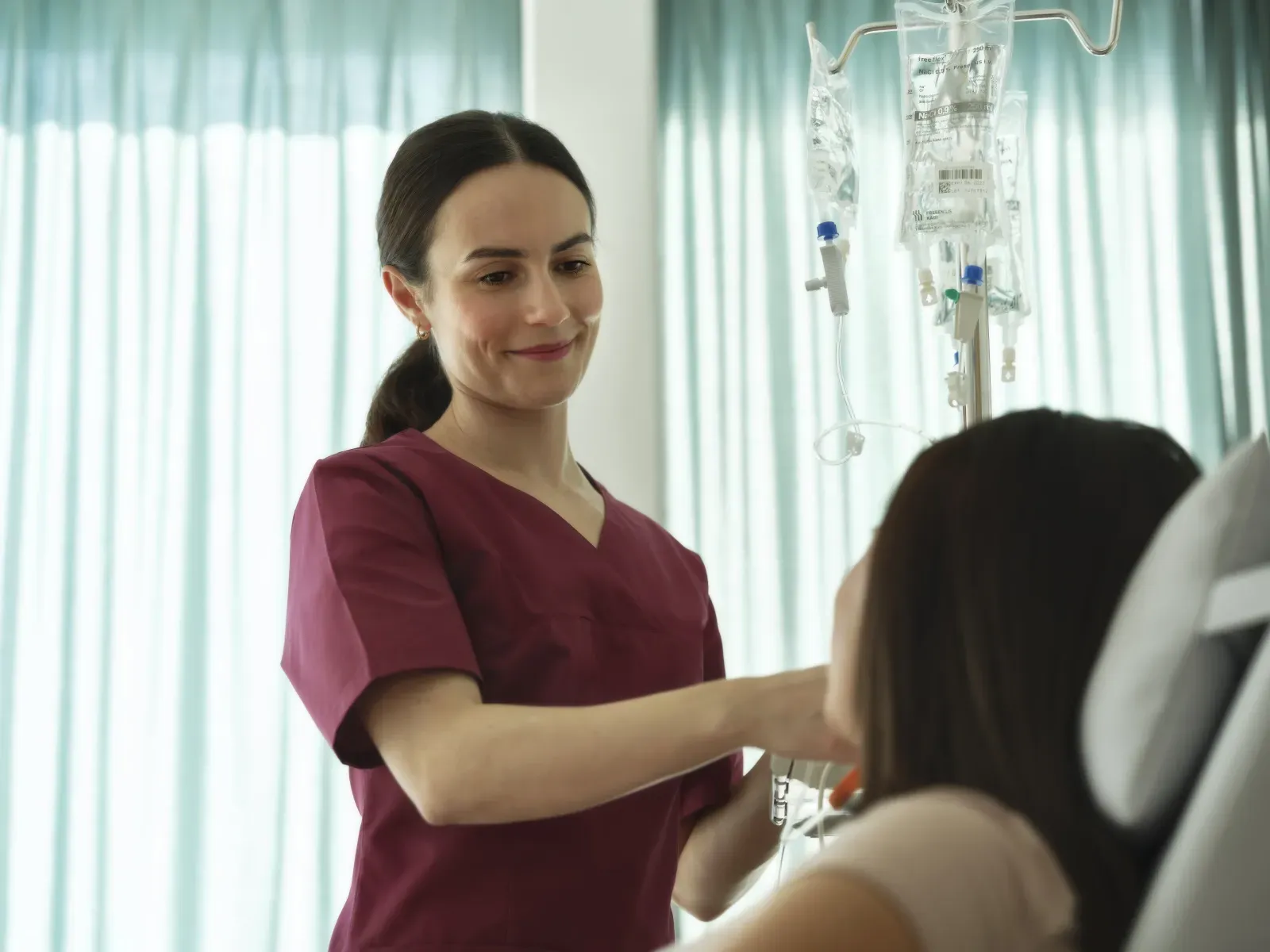
What does chemotherapy for breast cancer involve?
Chemotherapy is a term used to describe various medicines that are toxic to cancer cells. They target rapidly growing cells and can eliminate cancer or stop it from spreading.
There are various types of chemotherapy used to treat breast cancer. Treatment may involve one or more medications and can vary depending on the dose, treatment schedule, and method of administration.
Your experience of chemotherapy depends on both your treatment plan and your body’s response. Some people are able to continue with their everyday activities, while others need more time to recover. We maintain close contact throughout the course of therapy. Our aim is to minimise any potential side effects and support your well-being throughout your treatment and recovery.
When is chemotherapy recommended?
Chemotherapy is a common treatment for breast cancer, but not everyone has to have it. Your doctor will take into account factors such as the type of cancer, its stage and the risk of recurrence.
Chemotherapy may be recommended:
- Before surgery – to shrink the tumour (neoadjuvant treatment)
- After surgery – to destroy any remaining cancer cells (adjuvant therapy)
- As the main therapy – often in combination with other treatments such as immunotherapy or targeted therapy
- To alleviate symptoms and delay progression – if the cancer is incurable (palliative treatment)
Your doctor will run tests to better understand your cancer, including genetic, genomic and molecular tests. They will then discuss the results with our team of specialists and draw up a treatment plan tailored to your individual needs. This includes questioning whether chemotherapy is right for you.

What to expect during chemotherapy
There are various treatment plans possible with chemotherapy. Your doctor will give you a detailed overview of your treatment and what to expect.
How chemotherapy is administered
Chemotherapy can be administered:
- As tablets that you take at home
- Via a catheter or port into a vein during a hospital visit
A port is a small device that is placed under the skin. This is useful for long-term chemotherapy because it guarantees access even when peripheral veins are in poor condition.
A chemotherapy appointment usually lasts several hours. The chemotherapy is administered on an outpatient basis, which means you can go home on the same day.
Duration of treatment
Chemotherapy is administered in cycles and usually lasts three to six months in total. If you have breast surgery first, chemotherapy usually begins approximately three to four weeks afterwards to allow the area to heal.
Chemotherapy sessions take place in cycles at fixed intervals. This gives your healthy cells time to recover. A cycle includes the treatment session and the time until the next treatment. This may be one or more weeks.
A “dose-dense” chemotherapy plan for breast cancer involves frequent chemotherapy sessions, i.e. every one to two weeks.
Effects of treatment
Chemotherapy affects everyone differently. Careful planning can help to make treatment as manageable as possible.
Most side effects occur because chemotherapy also attacks healthy fast-growing cells, such as hair and bone marrow cells. This is usually temporary and improves after treatment.
One exception is that chemotherapy can permanently damage reproductive cells. Your care team will discuss fertility with you before treatment begins.
Before chemotherapy
Before treatment begins, your oncology nurse will explain what to expect and how we can support you in dealing with the side effects.
Some side effects of chemotherapy are mild. Others may be more severe. There are often medications or other ways to manage them better.
During chemotherapy
Every person responds differently to chemotherapy. Many people feel very tired and have an upset stomach, such as loss of appetite and nausea.
Other possible side effects include infections, hair loss, mouth sores, bruising and bleeding, and the onset of menopause. Most of these can be alleviated or treated.
Your care team will assist you throughout the entire process, and we are available around the clock should you need advice.
After chemotherapy
You should feel better within a few weeks after treatment. Full recovery may take several months, and after-effects such as fatigue may last even longer.
Compassionate support for side effects
We support you with continuous care and guidance at every stage of your cancer journey, including during chemotherapy and beyond.
There are ways to make the side effects of chemotherapy more manageable and to support your mental and physical health. Discuss your concerns with your care team. They can offer you support, advice and treatment.
From traditional therapies to the latest clinical techniques, we offer a wide range of support. These include:
- Specialist consultant available during treatment
- Personal advice and care from qualified oncology nurses
- The DigniCap® scalp cooling system for reducing hair loss
- Professional counselling on intimacy and emotional well-being
- Nutrition consultancy to support your health during treatment
- Peer support groups and well-being workshops
Find out more about the supportive care we provide at Affidea brustCare.